June 18, 2026
By We Buy NJ Homes Fast
How to Sell a Fire-Damaged House in New Jersey
What to know about selling a fire-damaged house in New Jersey, from as-is cash offers to insurance claims and your legal disclosure duties.
Introduction
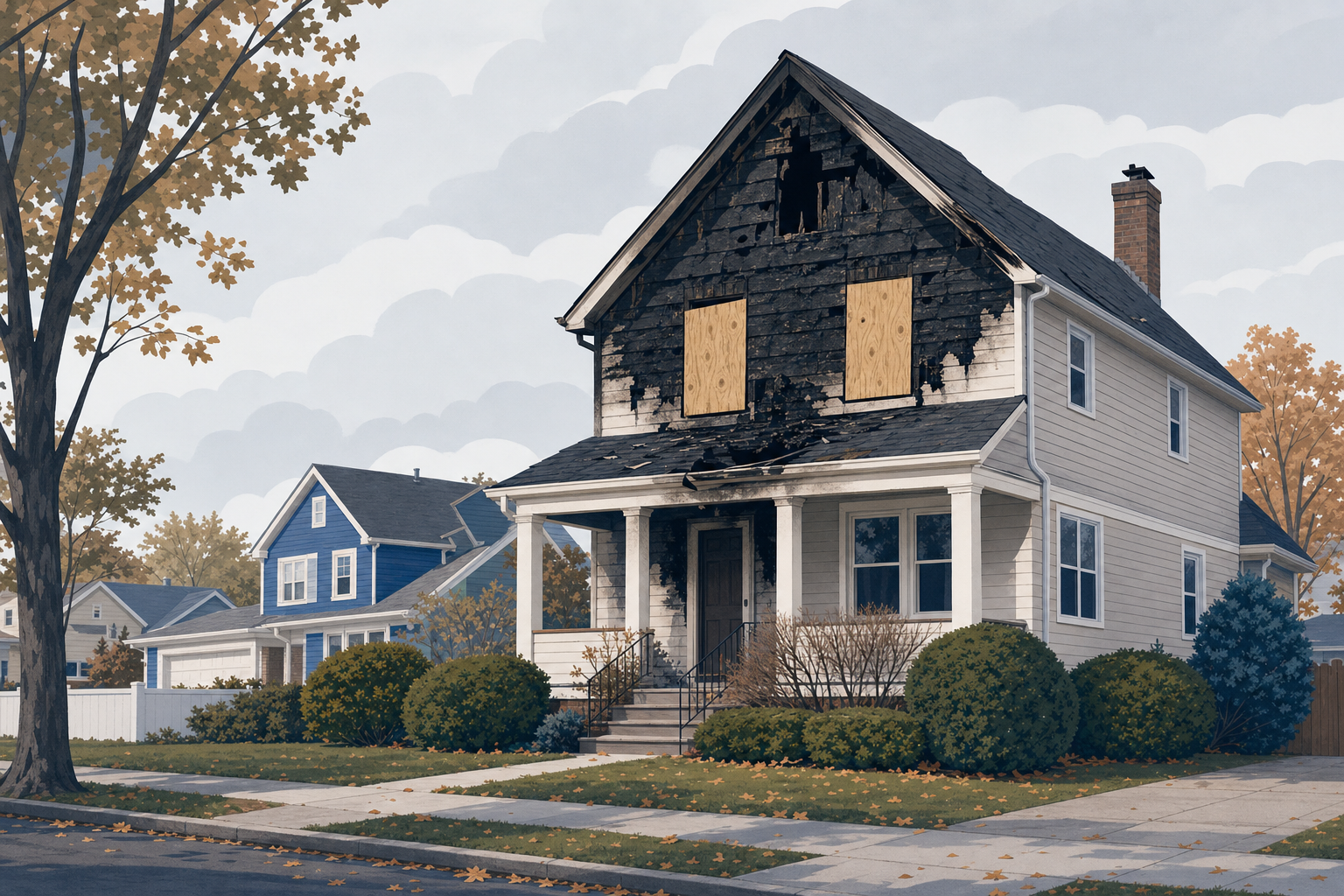
Yes, you can sell a fire-damaged house in New Jersey, and you have two realistic paths. You can sell it as-is to a local cash buyer who can close in a week or two, or you can repair it and list it on the open market for a higher price. Which one wins depends on how big your insurance payout is, how much cash you have for repairs, and how fast you need to move on.
If you are standing in a smoke-stained living room or looking at a kitchen that burned down to the studs, the stress is real and it is layered. You may be dealing with an insurance adjuster, a mortgage you still owe, somewhere to live tonight, and the plain grief of losing your home, all at the same time. Take a breath, because you have more room to maneuver than it feels like right now. We buy houses in any condition throughout Essex County, Passaic County, Camden County, and all 21 New Jersey counties, with no repairs and no cleanup required.
Can You Even Sell a House With Fire Damage?
You absolutely can. Fire damage does not make a property unsellable; it changes who will buy it and at what price. A traditional buyer using a mortgage usually can't, because most lenders won't finance a home with significant fire, structural, or safety damage until it's repaired and passes inspection. That's the real reason fire-damaged homes feel stuck on the open market, where the financing falls through, not the buyer's interest.
Cash buyers fill that gap. A local investor pays cash, skips the lender entirely, and factors the damage into the offer instead of walking away from it. So the practical question is rarely whether you can sell. It's whether you sell as-is for speed or fix the house first for a higher price. The rest of this guide walks through both.
Your Two Real Options for a Fire-Damaged Home
Most New Jersey homeowners with fire damage choose between a fast as-is cash sale and a traditional repair-then-list sale. There's no universally correct answer, only the one that fits your finances, your timeline, and how much work you can take on right now.
| Factor | As-Is Cash Sale | Repair, Then List With an Agent |
|---|---|---|
| Speed | 7 to 21 days | 4 to 9+ months (repairs + listing) |
| Repairs | None, sold exactly as it sits | Full restoration before listing |
| Out-of-pocket cost | $0 | $20,000 to $100,000+ in repairs |
| Sale price | Below market (reflects the damage) | Near market value once restored |
| Who handles permits and contractors | The buyer | You |
| Best when | You need speed, cash, or can't fund repairs | The home is structurally sound and you have time and capital |
The cash route usually makes sense when the damage is heavy, you don't have the money to restore, or you simply can't face months of contractors, permits, and inspections on top of everything else. Restoring and listing tends to win when the fire was contained, the structure is sound, and you have both the time and the capital to do the work properly and recover it in the sale price.
It's worth being honest about one trap with the repair route. A restored house only sells for top dollar if buyers can't tell it ever burned. Lingering smoke odor, mismatched repairs, or an obvious insurance-job patch will scare off retail buyers and drag the price right back down toward where a cash offer would have landed, except now you've spent months and a lot of money getting there.
When Marcus Ran the Numbers
When Marcus inherited his late father's two-family in Paterson after a 2026 kitchen fire, a restoration contractor quoted him $74,000 and roughly five months of work. His insurance check came to only $41,000, because the older policy paid actual cash value rather than full replacement cost. Rather than borrow the $33,000 gap and carry the mortgage, the taxes, and a vacant-property insurance surcharge for half a year, he took an as-is cash offer, closed in twelve days, and walked away with money in hand instead of a construction project he never asked for.
How Cash Buyers Price a Fire-Damaged Home
Understanding the math behind an offer is the best way to tell a fair one from a lowball. A cash investor starts with the home's after-repair value, or ARV, which is what the property would be worth fully restored based on recent comparable sales nearby. From that number they subtract the estimated cost of repairs and cleanout, the carrying and closing costs, and a reasonable profit margin. Whatever is left is your offer.
Here's a simplified example. Say a fully restored version of your home would sell for $400,000, and bringing it back will cost around $90,000 in repairs. After the investor accounts for several months of holding costs, closing costs, and margin, an offer somewhere in the high $200,000s can be entirely fair, even though it sounds far below that $400,000 headline. When you compare a cash offer against listing, you're really comparing that net cash number against the market price minus your repair bill, minus agent commissions, minus months of mortgage and insurance payments while the work gets done. Run both all the way to your actual take-home before deciding.
The As-Is Sale, Start to Finish
The as-is route is built for exactly this situation. A reputable cash buyer takes the home in its current condition, so you won't fix the roof, scrub the smoke damage, or rewire anything; the buyer prices the repairs in and handles all of it after closing. You don't even need to clean out, which means the charred furniture, the belongings the fire hoses soaked, and the debris can stay where they are, and you only need to remove the things that are irreplaceable to you first.
In practice, the timeline is short and predictable. You make contact and the buyer walks the property, usually within a day or two. A written cash offer follows, often the same day or the next. If you accept, a title company confirms ownership and any liens, and you close, commonly within five to twenty-one days, even when there are code violations or unpaid taxes attached to the property.
To picture it concretely, here are the kinds of things you can simply leave behind:
- Smoke-damaged or water-soaked furniture
- Broken appliances and electronics
- General debris and trash from the fire
- Old paperwork and unwanted belongings
Before you sign with anyone, vet the buyer the same way you'd vet a contractor. A trustworthy New Jersey buyer is local and knows your market, puts every term in writing, welcomes your attorney to review the contract, and can show proof of funds with a recent bank letter. Be wary of the opposite, like a national call center with no real local presence, pressure to sign today or lose the offer, a refusal to show proof of funds paired with talk of assigning your contract to someone else, or any request for upfront fees. If you're also behind on the mortgage on the damaged home, our guide on your options when you're behind on mortgage payments explains how a cash sale can stop the clock before foreclosure piles on.
Don't Leave Insurance Money on the Table
Before you accept any offer, get clear on your fire insurance claim, because it changes the math more than almost anything else. The moment it's safe to do so, document everything. Photograph the damage before you move or discard a thing, hold onto receipts for temporary housing since your policy's loss-of-use coverage often reimburses it, and leave damaged items in place until the adjuster has signed off.
Two things then decide what actually lands in your pocket. The first is who controls the claim at the time of sale, because if you sell before it settles the payout can get complicated, sometimes assigned to you and sometimes folded into the sale price, so get the arrangement in writing with both your insurer and your buyer. The second is whether your policy pays replacement cost or actual cash value. Older policies pay the depreciated actual cash value, which is exactly why Marcus's check fell short, so read your declarations page before you assume a number.
A good cash buyer will work around an open claim and explain in plain terms how it affects your net proceeds. If your insurer is dragging its feet or denying a fair claim, the New Jersey Department of Banking and Insurance handles consumer complaints.
What New Jersey Law Requires You to Disclose
As-is does not mean no rules. New Jersey's disclosure duty comes from common law, anchored by the state Supreme Court's decision in Weintraub v. Krobatsch, and it applies even to a cash sale. You must disclose every known latent material defect, and fire history is squarely one of them. At a minimum, be ready to disclose:
- The fire and which areas it affected
- Smoke and soot damage, including lingering odor
- Water damage from firefighting efforts and any resulting mold
- Compromised structural elements, wiring, or HVAC
- Any open permits or municipal code violations tied to the fire
Use the state's official Seller's Property Condition Disclosure Statement and answer honestly. Hiding fire history can unravel a sale or trigger a lawsuit long after closing, while disclosing it protects you, and a legitimate cash buyer expects it anyway. After a serious fire, your municipality may also require permits and inspections before the home can be reoccupied or rebuilt; the NJ Department of Community Affairs administers the statewide Uniform Construction Code, and a cash buyer typically takes that permitting burden off your hands.
Handling Liens, a Mortgage, and a Vacant Home
A fire-damaged house often comes with extra financial knots, and the good news is that most of them untie at the closing table rather than out of your pocket. Mortgage balances, back taxes, and municipal liens are paid directly from the sale proceeds by the title company, so you usually net the difference instead of writing checks up front.
You almost never have to pay off liens or back taxes before selling. They come straight out of the proceeds at closing.
When Lily's row home in Camden was damaged by a neighbor's fire in early 2026, she still owed $118,000 on her mortgage and had two unpaid water bills the city had turned into liens. She assumed she had to clear all of it before she could sell. She didn't. At closing, the title company paid off the mortgage and the municipal liens straight from the proceeds, and Lily walked away with the remainder, having never written a single check.
Speed matters here for a practical reason, because a vacant, fire-damaged home keeps costing you. Insurers charge higher vacant-property premiums or cancel coverage entirely, the taxes keep accruing, and an empty damaged house is a magnet for vandalism and weather damage that only deepens the loss. If the damage is severe and you owe more than the home is worth, a short sale negotiated with your lender may be the better route, and if the fire happened in a home you recently inherited, our guide to selling an inherited property in New Jersey covers the probate side.
Conclusion
Selling a fire-damaged house in New Jersey is absolutely doable, and you don't have to navigate it alone. If you have the insurance payout, the cash, and the patience, restoring and listing can capture the most value. If you need speed, certainty, and zero out-of-pocket repairs, an as-is cash sale lets you close in days and move forward with money in hand. Whichever path you choose, document your insurance claim carefully, disclose the fire honestly, and let any liens settle at closing rather than draining your savings.
Ready for a fast, no-obligation cash offer on your fire-damaged home? Contact the We Buy NJ Homes Fast Team. We buy houses in any condition across all 21 New Jersey counties, handle the repairs and the permits ourselves, and close on your timeline, so you can finally put the fire behind you.
Disclaimer. This content is for informational purposes only and does not constitute legal, financial, or tax advice. Laws and programs change frequently, and individual situations vary significantly. Always consult with qualified professionals for advice specific to your situation.